Hidden Complexities: Why Your Choice of Legal Representation Matters More Than You Think
After a traumatic accident, legal challenges can be overwhelming. Learn why strong legal representation is key to securing fair compensation and justice.
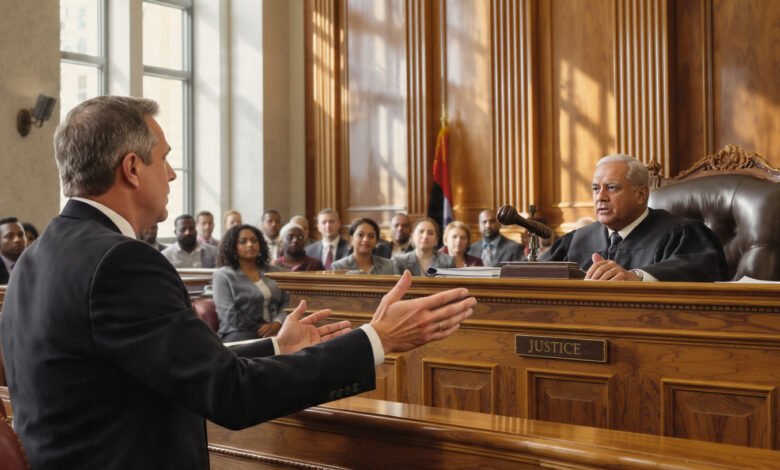
The moments following a traumatic event—whether it’s a sudden impact on a busy highway or a slip that results in a long-term disability—are often defined by a blur of adrenaline, confusion, and urgent medical decisions. In this state of vulnerability, the legal path forward can seem like a secondary concern. However, as the initial shock fades and the financial reality of medical bills, property damage, and lost wages begins to set in, the complexity of the legal landscape becomes apparent.
Securing justice is rarely a straight line. It is a labyrinth of statutes, insurance policies, and evidentiary requirements that can overwhelm even the most organized individual. While many believe that the facts of an accident speak for themselves, the reality is that the quality of your advocacy is often the deciding factor in whether you receive a settlement that truly covers your lifetime needs or one that leaves you struggling. This is why finding a fort walton beach injury attorney is about more than just filing paperwork; it is about securing a shield against the tactical maneuvers of insurance corporations and ensuring your voice is heard in a system designed to prioritize the bottom line.
The Illusion of Simplicity in Liability
At first glance, many accidents seem “open and shut.” If a driver runs a red light and hits you, they are at fault. If a commercial floor is wet and there is no warning sign, the business is responsible. Unfortunately, the legal system does not operate on common sense alone; it operates on the “burden of proof.”
In many jurisdictions, the concept of comparative negligence can drastically alter the outcome of a case. Defense attorneys and insurance adjusters are trained to find any percentage of fault that can be attributed to the victim. If they can argue that you were slightly distracted, moving faster than the flow of traffic, or wearing improper footwear for the conditions, they can shave thousands—or even hundreds of thousands—of dollars off your compensation.
Professional legal representation acts as a counter-weight to these tactics. A seasoned advocate doesn’t just look at what happened; they look at how to prove it through accident reconstruction, forensic expert testimony, and meticulous evidence gathering. They anticipate the “comparative fault” trap before it is even set, ensuring that the narrative remains focused on the primary negligence that caused the harm.
The True Cost of Injury: Beyond the Immediate Hospital Bill
One of the most significant mistakes unrepresented individuals make is settling too early. Insurance companies often reach out within days of an incident with a “quick settlement” offer. To a person facing mounting hospital bills and a damaged vehicle, a check for $20,000 might look like a lifeline. However, that settlement comes with a global release waiver: once you sign, you can never ask for more, regardless of how your health evolves.
The true cost of an injury is often hidden in the future. What happens if a back injury requires surgery two years from now? What if a “minor” concussion leads to chronic cognitive fatigue that prevents you from advancing in your career or maintaining your current position? A lawyer’s role is to calculate the future cost of an injury. This process involves:


- Life-Care Planning: Estimating the long-term cost of physical therapy, recurring medications, and potential home modifications if mobility is permanently affected.
- Economic Impact Analysis: Calculating not just lost wages today, but the loss of future earning capacity—the money you would have made over a lifetime had the injury not occurred.
- General Damages Valuation: Quantifying non-economic losses like chronic pain, emotional distress, and the diminished quality of life that stems from being unable to engage in hobbies or family activities.
The Evolving Landscape of Modern Transportation
As our methods of getting from point A to point B evolve, so do the legal frameworks surrounding them. We are no longer living in an era where every collision involves two private vehicle owners with standard insurance policies. The rise of the gig economy and rideshare platforms has introduced a new layer of friction into the recovery process.
For instance, when you are involved in a collision with a vehicle operating under a ride-hailing app, the question of “who pays” becomes significantly more opaque. Liability depends entirely on the “period” the driver was in at the time of the impact—whether the app was off, they were logged in and waiting for a ride, or a passenger was actively in the car. Each of these stages triggers a different level of insurance coverage, and insurance companies often engage in “finger-pointing” to avoid taking responsibility.
Navigating these multi-tiered insurance structures is a daunting task for anyone without deep legal knowledge. You are often pitted against multi-billion-dollar tech companies with legal teams designed to insulate the corporation from liability. In these specific scenarios, working with a lyft accident lawyer pensacola becomes essential. These professionals understand the specific digital evidence required—such as GPS logs, app activity records, and internal driver data—to prove which insurance policy should be triggered and at what limit.
The Psychological Component of Advocacy
There is an underrated element of legal representation that rarely makes it into the brochures: the preservation of the victim’s mental health. Dealing with the aftermath of a serious accident is a full-time job. It involves managing medical appointments, dealing with car repairs, communicating with employers, and answering endless calls from insurance adjusters who may use your words against you later.
When you have professional representation, the lawyer becomes the “point of contact” for all external parties. This simple shift creates a vital buffer between the victim and the stress of the dispute. It allows the injured party to focus on what is most important—physical and emotional healing. The peace of mind that comes from knowing an expert is handling the deadlines, the “legalese,” and the confrontations cannot be overstated. It transforms the victim from a target of insurance tactics into a protected party.
The Technical Battle: Evidence and Experts
We live in an age of data, and modern litigation reflects that. A “he said, she said” argument rarely wins a case in the current legal environment. Success now depends on the ability to harness technology and scientific expertise.
- Black Box Data: Most modern vehicles contain an Event Data Recorder (EDR). This device captures speed, braking patterns, and steering angles in the seconds leading up to a crash. Accessing and interpreting this data requires specific technical tools and the expertise of a forensic mechanic.
- Surveillance Integration: From doorbell cameras to municipal traffic cams and dashcams, there is often video evidence of an incident. However, this footage is often overwritten or deleted within days. A legal team acts quickly to issue “spoliation letters,” which legally compel the owners of the footage to preserve it or face severe penalties in court.
- Biomechanical Engineering: In complex cases, lawyers often hire experts to explain how the forces of an impact affected the human body. This bridges the gap between a “minor dent in a bumper” and a “permanent spinal injury,” proving that even low-speed accidents can cause life-altering physical damage.
This level of investigation is expensive and time-consuming. Most individuals don’t have the resources to hire three different expert witnesses to prove their case, but a dedicated law firm does. They invest in the case because they understand that the details are where the victory lies. This is particularly true in high-stakes road incidents, where auto accident attorneys in pensacola must often dig through layers of digital and physical evidence to reconstruct the truth for a jury.
The Nuance of Medical Causation
One of the most complex hurdles in an injury case is proving “causation.” Insurance companies will often dig through years of your medical history to find a “pre-existing condition.” If you have ever sought treatment for back pain in the last decade, they will argue that your current injury is merely a continuation of that old problem, rather than a result of the accident.
Overcoming this requires a deep understanding of medical records and the ability to work closely with physicians to differentiate between old degenerative changes and new traumatic injuries. A lawyer helps frame the medical narrative, ensuring the focus remains on the “eggshell skull” doctrine—the legal principle that a defendant is liable for all damages caused, even if the victim had a pre-existing condition that made them more susceptible to injury.
The Value of the “Trial-Ready” Reputation
It is a well-known secret in the legal industry that insurance companies keep files on law firms. They know which attorneys are “settlement mills”—firms that take a high volume of cases and settle them quickly for whatever the insurance company offers just to keep their overhead covered. They also know which firms are willing to go to trial.
If an insurance company knows your lawyer is afraid of the courtroom or lacks the resources to litigate, their “highest and best” offer will always be lower than the true value of the case. Conversely, if your representation has a track record of winning verdicts in front of a jury, the insurance company’s incentive to offer a fair settlement increases dramatically. They would rather pay a fair amount now than risk the unpredictability and massive costs of a lost trial.
Conclusion: Empowerment Through Information
Ultimately, the legal process is not just about “winning” a sum of money. It is about accountability and the restoration of a life that was interrupted by someone else’s negligence. The complexities of the law—from the nuances of rideshare insurance to the technicalities of medical causation and lien resolution—are too great to navigate alone while also trying to recover your physical health.
Choosing the right representation is the most significant decision you will make in the wake of an accident. It is the difference between being a passive participant in a system that often prioritizes corporate profit, and being an empowered individual with the resources to demand what is fair. By understanding these hidden complexities, you move from a place of uncertainty to a place of strength, ensuring that your story is told, your injuries are validated, and your future is protected.